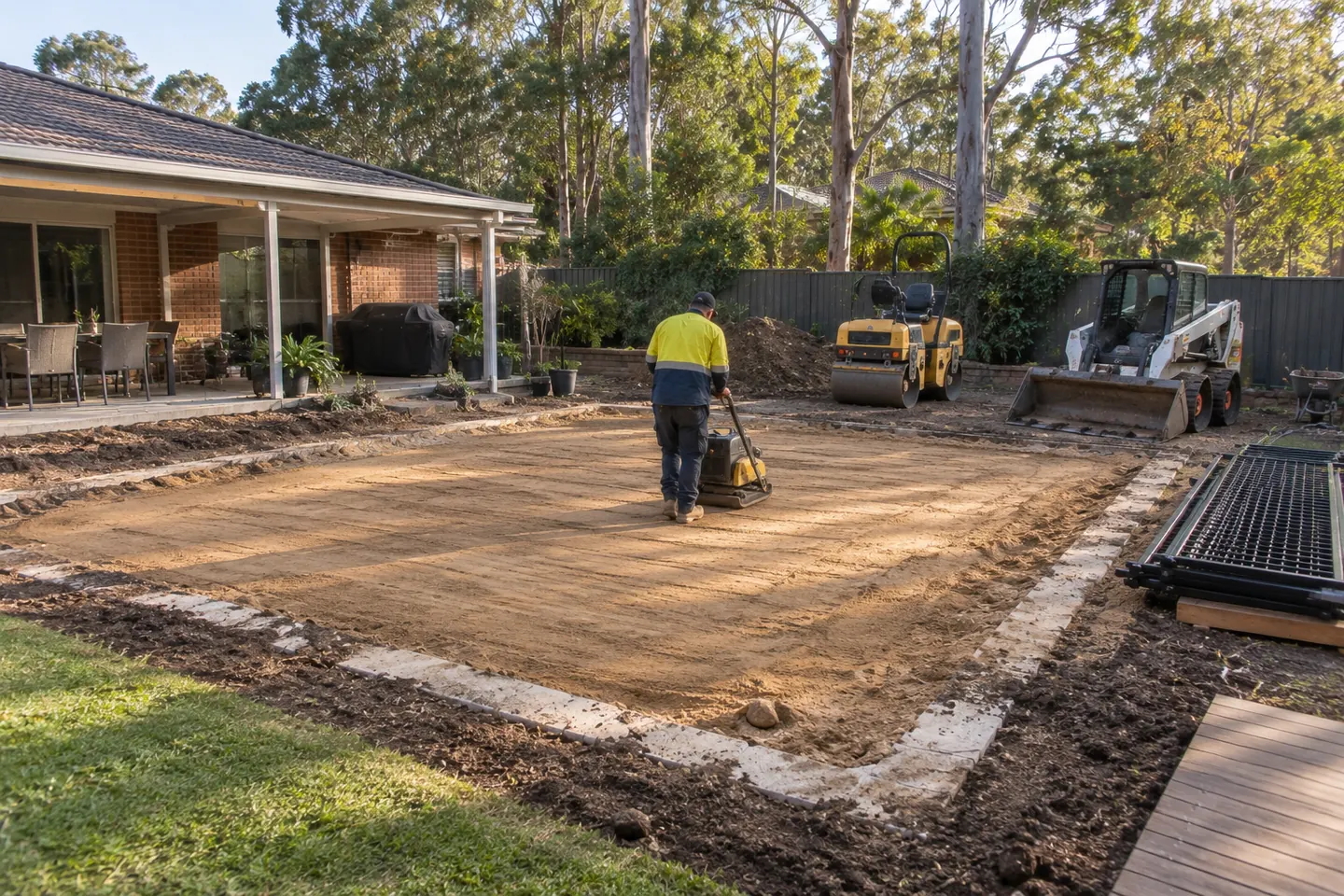
What full removal means
Every part of the pool comes out:
- The shell — concrete and reinforcement, or fibreglass.
- The floor, all of it.
- Coping and bond beam.
- Plumbing, skimmer boxes and returns.
- Bedding material under fibreglass shells.
Then the hole is backfilled in compacted layers with clean material and finished to suit the next use.
Why people choose it
Future building. A granny flat, an extension, a garage, a new house after a knock-down-rebuild. Nothing buried under the footings.
Selling. No buried structure to disclose or explain, and no pool barrier or pool compliance obligations once it is gone.
Drainage. A broken shell left in the ground can still hold water and create a soggy patch. A full removal lets the ground drain naturally.
Certainty. No settlement surprises years later.
Backfill is the part that matters
Most complaints about removed pools are not about the demolition. They are about the lawn sinking a year later.
Good backfill means:
- Clean, suitable fill — not demolition rubble.
- Layers — placed in lifts rather than tipped in one go.
- Compaction of each layer with the right equipment.
- Testing where a future slab or footings are planned, as your engineer requires.
- Topsoil on top for turf or gardens.
Full removal versus fill-in
| Full removal | Fill-in | |
|---|---|---|
| Cost | Higher | Lower |
| Time | Longer | Shorter |
| Building over later | Generally feasible with engineering | Often restricted |
| Buried structure | None | Lower shell remains |
| Drainage | Natural | Depends on floor breaking |
| Best for | Future building, selling | Lawn and garden only |
See pool fill-in for the other option.
Access and disposal
Full removal means carting all the shell. On tight access sites that is the largest time cost. See concrete pool removal for how access changes the method.
Approvals
Commonly required in NSW. See council and approvals.
Costs
Concrete full removal commonly $14,000–$35,000+; fibreglass $7,000–$16,000. See the 2026 cost bands.
Call 02 6422 4202 or send your pool details through.
Two ways to get rid of a pool
Full removal
Shell out, compacted backfill. Costs more. Keeps building options open and leaves nothing buried.
Fill-in
Floor broken, walls cut down, shell filled. Costs less. Best for lawn and garden only.
Questions people ask before they commit
Can I build on the ground after full pool removal?
Often, yes — provided the backfill is placed and compacted to a suitable standard and your engineer is satisfied with the ground for the proposed footings. Many builders and engineers will require geotechnical testing or specific footing designs over backfilled areas. Plan the backfill with the future use in mind.
What fill is used?
Clean, suitable material such as crushed rock, road base or clean excavated soil, placed in layers and compacted. The top layer is usually topsoil for turf or a compacted base for paving. Demolition rubble and rubbish should not go back in the hole.
Does full removal help when selling?
It removes the need to maintain a compliant pool barrier and pool compliance paperwork for sale, and avoids questions about a buried shell. A record of the removal and backfill is worth keeping for buyers.
How long does full removal take?
Commonly three to five working days on site for a concrete pool with reasonable access, less for fibreglass. Tight access and rock add time.